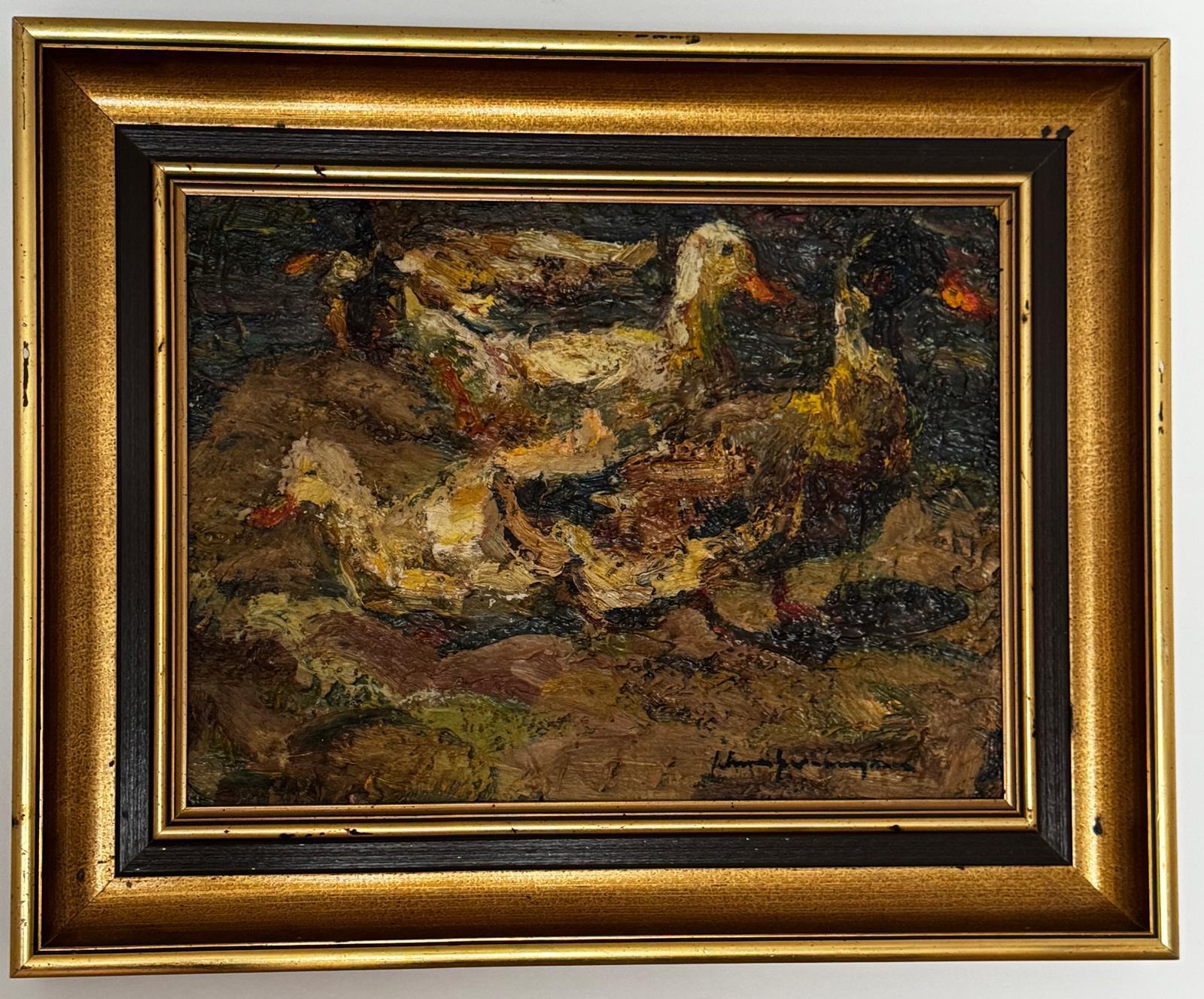
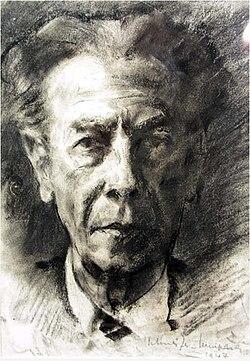
Rudolf Schweitzer–Cumpăna
(b. 7 May 1886, Pitești, Romania – d. 17 February 1975, Bucharest, Romania)
Rudolf Schweitzer-Cumpăna was a distinguished Romanian painter and graphic artist, known especially for his evocative depictions of rural life, peasant figures, still lifes, landscapes, and portraits. Born on 7 May 1886 in Pitești, Romania, into an ethnic German family, he showed artistic talent from an early age and pursued formal art studies abroad.
He studied at the Royal Academy of Arts in Berlin (1904–1909), where he trained under notable teachers including Erich Hancke, Arthur Kampf and Anton von Werner, before returning to Romania in 1909 to fulfill his military service and begin his professional career as an exhibiting artist.
Schweitzer-Cumpăna made his exhibition debut at the Salonul Oficial in Bucharest in 1911 and soon became a regular participant in major Romanian exhibitions. Over the decades, he developed a prolific output of paintings that combine keen observation with a warm palette and realistic style rooted in everyday rural and domestic scenes. His work often reflects a deep respect for peasant life and the Romanian countryside.
Beyond his artistic production, Schweitzer-Cumpăna was also active as a teacher—he was appointed professor at the Institute of Fine Arts Nicolae Grigorescu in Bucharest in 1951—and remained an influential figure in the Romanian art world throughout his long career. He received honors such as the title of Maestru Emerit al Artei and made significant donations of his works to museums across Romania.
He died on 17 February 1975 in Bucharest, Romania, leaving behind a rich legacy celebrated for its humanity, realism, and expressive interpretation of traditional Romanian subjects.
More Artworks from Rudolf Schweitzer–Cumpăna